REVIEW · KIGALI
Kigali City Tour and Sightseeing
Book on Viator →Operated by Sahihi Africa Tours · Bookable on Viator
Kigali history comes at you fast. This private Kigali city tour is a tight, well-timed way to get your bearings right after landing in Rwanda’s capital, mixing major memorials, local life at Kimironko Market, and a hill stop with the city’s name.
I love the way the route is built around meaning, not just photos. You start at the Kigali Genocide Memorial for context, then you move through sites that explain what happened and why—so the day makes emotional sense instead of feeling like a checklist.
I also love the human touch you can get from the guide—Mr Jabil, for example, is described as friendly, energetic, patient, and seriously invested in explaining Rwanda’s story clearly. The main drawback to plan for is that this is a heavy-history day; if you want a light, casual sightseeing loop, you may find it a lot.
In This Review
- Key things to know before you go
- A smart first day in Kigali: how this 5.5-hour loop helps
- Kigali Genocide Memorial: starting with the story that frames everything
- Kimironko Market: souvenirs and fabrics, plus what people actually eat
- Belgian Peacekeepers Memorial: a short stop with a big message
- Campaign Against Genocide Museum: learning inside a political landmark
- Mt Kigali: seeing the city-name origin from a hill stop
- Guide impact: what it means when Mr Jabil sets the tone
- Price and value: is $166.68 per person worth it?
- Who this Kigali tour suits best (and who it might not)
- Should you book this Kigali city tour?
- FAQ
- FAQ
- How long is the Kigali City Tour and Sightseeing?
- What is the price per person?
- Is pickup included?
- Is this tour private?
- Where does the tour go?
- How long do the main stops take?
- Do I have to pay admission fees for these stops?
- Will I receive confirmation after booking?
- Can I cancel for free if plans change?
- What do I get digitally?
Key things to know before you go
- A 5.5-hour private route: built for your first day in Kigali without dragging too long
- Free entry at the listed sites: Kigali Genocide Memorial, the museums and memorials, and Mt Kigali stop as described
- Kimironko Market for everyday Rwanda: locally made items, fabrics, local food, and vegetables in one place
- Peacekeeper history in a short stop: the Belgian UN site is brief but powerful
- Mt Kigali ties the city together: a hill stop that helps you understand why Kigali is called Kigali
- Mr Jabil-style guiding: patient, energetic, and tuned to your questions
A smart first day in Kigali: how this 5.5-hour loop helps
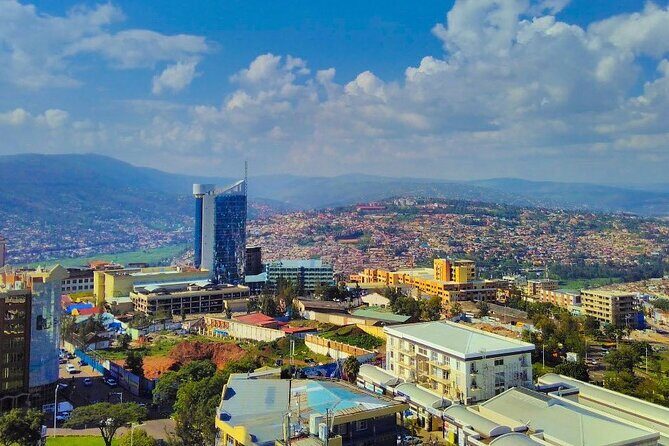
Kigali is often described as clean and safe, and that matters on your first day. When a city feels organized, you can focus on seeing and learning instead of figuring out logistics. This tour is designed for exactly that: a single half-day that balances serious memorials with a real slice of local market life.
You’ll also get pickup offered, which is a big deal in a capital city—less time coordinating, more time doing. And because this is a private tour/activity, only your group participates, so the pace can feel more natural than a crowded group shuffle.
You should still know the time window is compact. Roughly 5 hours 30 minutes is long enough to cover five stops, but short enough that you’ll want to be ready to transition quickly between locations.
You can also read our reviews of more city tours in Kigali

Kigali Genocide Memorial: starting with the story that frames everything
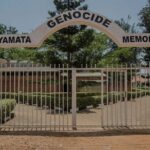
Your day begins at the Kigali Genocide Memorial, and that timing is thoughtful. The memorial commemorates the 1994 Rwandan genocide, with remains of over 250,000 people interred on-site. There’s also a visitor centre for people wanting to understand the events leading up to the genocide.
This stop is scheduled for about 2 hours, which is enough time to take in the memorial and also sit with the context from the visitor centre. If you’re the type who likes to understand what you’re looking at—names, timeline, causes—this length makes sense.
Here’s the practical consideration: this place is emotional. Even if you’ve read before, you’ll likely feel it. I suggest you give yourself a little mental space before you arrive—no rushing, no multitasking, and be ready to accept that learning here can be heavy.
Kimironko Market: souvenirs and fabrics, plus what people actually eat

After the memorial, you shift gears to Kimironko Market, located in the Kimironko neighborhood. It’s described as the busiest market in town, and that energy is part of why it works so well in the itinerary. You’re not just absorbing tragedy—you’re seeing daily life and the economy of the city.
This stop is about 1 hour, which is a smart amount of time if your goal is a quick but real taste of the place. You’ll find locally made products, including souvenirs and fabrics for clothes, plus local food and different types of vegetables.
What I like about including Kimironko is that it keeps your Kigali day from turning into only memorial tourism. You get to walk through a working market, ask questions, and notice how people live. If you like buying small items that connect you to a place, this is a good moment to look.
If you’re sensitive to crowds or noise, you’ll still be fine—you just might want to keep your pace steady and let the guide lead the way to reduce stress.
Belgian Peacekeepers Memorial: a short stop with a big message
Next comes the Belgian Peacekeepers Memorial, lasting about 30 minutes. Ten Belgian UN peacekeepers were murdered by Hutu extremists in Kigali, described as an attempt to provoke a withdrawal of UN forces—clearing the way for the genocide to unfold.
Because the stop is short, it shouldn’t feel like a rushed history lecture. Instead, it works like a chapter break: you’re reminded that international presence, decisions, and violence all intersected during the 1994 events.
For me, this is the kind of stop that becomes more meaningful when your guide can connect the dots—what happened, what it meant, and how it fits the wider narrative you started at in the memorial.
Campaign Against Genocide Museum: learning inside a political landmark
Then you head to the Campaign Against Genocide Museum, scheduled for about 1 hour. It’s managed by the Rwanda Cultural Heritage Academy and housed in the Parliamentary building of Rwanda. The museum was inaugurated in 2017 by Paul Kagame, with the aim of showcasing Rwanda’s history during the campaign against the genocide targeting the Tutsi.
This is a valuable stop because it adds another layer to your understanding. The memorial gives you the weight of loss; the museum helps you connect that loss to how the campaign unfolded and how Rwanda frames that history.
One practical note: museum time can feel slow if you try to rush through. Since you only have a short block here, I’d plan to ask your guide for the key points you most want. If you’re more focused on timeline, ask for chronology. If you want social context, ask for explanations tied to the exhibits.

Mt Kigali: seeing the city-name origin from a hill stop
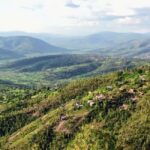
You finish with Mt Kigali (Mont Kigali in French), about 1 hour. This hill is located directly west of Kigali’s city center in Nyarugenge District, and the majority of Nyarugenge District is described as being on the slopes of Mont Kigali.
This stop matters because it shifts you from history into geography. You learn the physical shape of Kigali and why the city’s name is tied to the hill. After the memorials and museums, it’s a nice way to look at the city as a place people live, not just as a site of events.
If you’re photo-minded, this is one of the best moments to capture orientation shots—something that reminds you where you are in the city layout. Even if you only have an hour, ending with a viewpoint-style stop helps the day feel complete.
Guide impact: what it means when Mr Jabil sets the tone
The biggest standout from real-world feedback is the guide. One guide you may encounter—Mr Jabil—is described as friendly, full of energy, patient, and full of cultural and history knowledge about Rwanda. People also mention that he made the experience worth their time, and that he kept things easy and on schedule.
That matters more than it sounds. In Kigali, the difference between reading facts and understanding context can be the difference between a day that feels like information and a day that feels like comprehension. A good guide helps you avoid missing the key story beats.
If you want the most from the tour, come with a few prompts. Ask what you should pay attention to at the memorials. Ask how the market reflects day-to-day Kigali life. If you’re traveling with family, ask for a pace that fits everyone.
Price and value: is $166.68 per person worth it?
At $166.68 per person for about 5 hours 30 minutes, the price may look steep if you’re comparing it to self-guided sightseeing. But here’s the value logic that makes this price make sense.
First, you’re covering multiple major sites in one organized block: the Genocide Memorial, Kimironko Market, the Belgian Peacekeepers Memorial, the Campaign Against Genocide Museum, and Mt Kigali. That’s a lot of ground for a half day, and it’s exactly the kind of day where local help saves time and confusion.
Second, the itinerary is built with free admission at the sites listed—Kigali Genocide Memorial, Kimironko Market, Belgian Peacekeepers Memorial, and the Campaign Against Genocide Museum all show admission ticket free. That means your main cost is essentially guidance and the structure that connects the stops.
Third, you get pickup offered and a private setup. Even if you’re the kind of traveler who likes to plan everything yourself, the private structure can reduce stress, especially on a first day.
One small consideration: because admissions are listed as free, the tour cost is mostly about the guide and logistics. So if you’re the type who wants to spend every minute on personal exploration with no guidance, you might not fully use the value here.
Who this Kigali tour suits best (and who it might not)
This tour is a strong fit if:
- you’re in Kigali for the first time and want a structured start
- you want a mix of memorial learning plus local market life
- you like guides who explain the why, not only what you’re seeing
- you’re traveling with a group that would enjoy a private pace
It might be less ideal if you:
- want a light, sightseeing-only day with minimal emotional content
- prefer to wander on your own with no timing pressure
- struggle with staying focused through history-heavy stops in a single morning or afternoon block
The day runs about 5.5 hours, so you’ll want to plan energy and attention accordingly.
Should you book this Kigali city tour?
I’d book it if you’re heading to Rwanda and want your first Kigali day to do real work. The route gives you context first, then human-scale daily life, then a geographic finish on Mt Kigali. That balance helps you feel oriented and informed, not just entertained.
If you go, I’d prepare for the emotional weight of the memorials. Bring a calm mindset, and let your guide help you make sense of what you’re seeing. Also, if you care about history depth, ask your guide to tailor explanations as you move from stop to stop.
If you want a clean, efficient way to understand Kigali quickly—this is a practical choice.
FAQ
FAQ
How long is the Kigali City Tour and Sightseeing?
The tour is approximately 5 hours 30 minutes.
What is the price per person?
The price is $166.68 per person.
Is pickup included?
Pickup is offered.
Is this tour private?
Yes. It is a private tour/activity, so only your group will participate.
Where does the tour go?
The tour includes stops at Kigali Genocide Memorial, Kimironko Market, Belgian Peacekeepers Memorial, Campaign Against Genocide Museum, and Mt Kigali.
How long do the main stops take?
Kigali Genocide Memorial is listed as 2 hours, Kimironko Market 1 hour, Belgian Peacekeepers Memorial 30 minutes, Campaign Against Genocide Museum 1 hour, and Mt Kigali 1 hour.
Do I have to pay admission fees for these stops?
Admission tickets are listed as free for each stop shown.
Will I receive confirmation after booking?
Confirmation is received at the time of booking.
Can I cancel for free if plans change?
Yes. You can cancel up to 24 hours in advance for a full refund.
What do I get digitally?
You’ll have a mobile ticket.