Kigali clicks faster on foot. This half-day walking tour is a handy first look at the city, with a local guide and morning or afternoon departures, so you can fit it into your schedule. You’ll hit places like Nyamirambo Women’s Center and Kigali’s City Market while learning what to notice, where to take photos, and how neighborhoods connect.
What I like most is the mix of stops that explain daily Kigali life, not just big sights. Ivuka Arts Kigali gets you into the city’s creative side, and Nyamirambo Women’s Center turns into real, human context for current Rwanda, not textbook history.
One thing to consider: this route is about orientation and conversations, so you may not get a parade of major, dramatic landmarks. If you’re expecting wall-to-wall storytelling at every turn, the experience can feel uneven depending on the guide and what’s happening around town.
Key points to know before you go
- Ivuka Arts Kigali (free, about 20 minutes): A strong start with an art center and gallery vibe.
- Belgian Peacekeepers Memorial (free, about 30 minutes): A sobering stop tied to the lead-up to the genocide.
- Nyamirambo Women’s Center (free, about 30 minutes): A women-led NGO focused on education and vocational training.
- Biryogo (about 30 minutes): A colorful car-free street area known for cultures and foods.
- Kigali City Market (free, about 30 minutes): Practical, everyday shopping with easy photo opportunities and reasonable prices.
- Local guide + bottled water: You get a drink included, and you’ll also pick up tips to use for the rest of your stay.
In This Review
- A 2.5-hour Kigali orientation that actually helps
- Ivuka Arts Kigali: a creative opening, not just monuments
- Belgian Peacekeepers Memorial: where Kigali history turns serious
- Nyamirambo Women’s Center: the city’s present tense
- Biryogo car-free zone: photos, food, and everyday energy
- Kigali City Market: the real place to wander (and snack)
- How the guide can change the whole tour
- Price and value: $30 for context, not just sightseeing
- Practical logistics that make this easier than it sounds
- Should you book the Kigali Walking Tour?
- FAQ
- How long is the Kigali Walking Tour?
- How much does the tour cost?
- What stops are included on the walk?
- Where does the tour start and end?
- Is it a mobile-ticket tour?
- What’s included, and what should I bring?
- Is free cancellation available?
A 2.5-hour Kigali orientation that actually helps
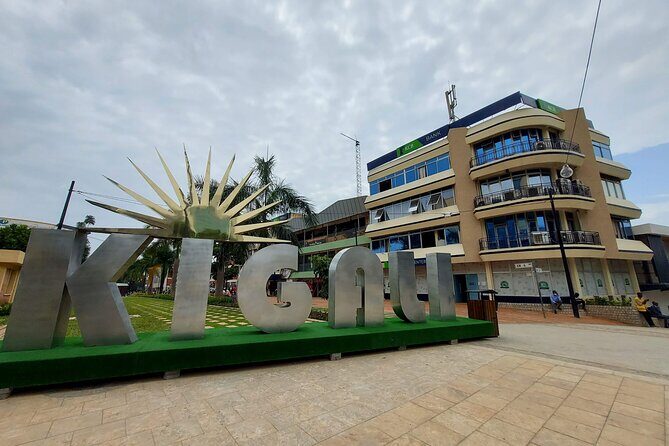
This tour is designed for first-time visitors who want to get their bearings fast. At about 2 hours 30 minutes, it’s long enough to cover a few different parts of Kigali, but short enough that you’re not wiped out for the rest of the day.
The schedule is flexible. You can choose a morning or afternoon start time, which matters in Kigali because you’ll likely want your best daylight for photos and city wandering after the tour.
Logistically, the tour starts in Kigali Heights (KG 7 Ave) and ends downtown. That means you’re not only learning where things are—you’re also getting dropped off where you can keep moving.
Ivuka Arts Kigali: a creative opening, not just monuments
The first stop is Ivuka Arts Kigali, an arts center and gallery in Kigali. It’s quick—around 20 minutes—and admission is free.
Why it works as a starting point: it signals that Kigali isn’t only about history sites. The city also has an active arts scene, and that shapes how you’ll see the rest of what you visit that day. If you like photography, this is often where people begin collecting angles—walls, exhibits, and the general creative energy around the center.
If you’re short on time, this stop is still worth it because it changes your mindset. Instead of hunting for a single “main attraction,” you learn to notice how Kigali expresses itself in everyday spaces.
You can also read our reviews of more walking tours in Kigali



Belgian Peacekeepers Memorial: where Kigali history turns serious

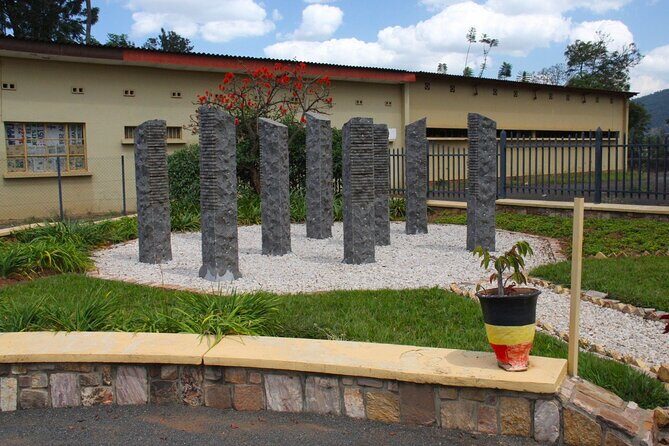
Next comes the Belgian Peacekeepers Memorial, another free stop with a 30-minute visit.
This is the kind of place where you slow down, because it’s tied to a specific tragedy: ten Belgian UN peacekeepers were murdered in Kigali by Hutu extremists, in a plan meant to push the UN to withdraw. That withdrawal then helped clear the way for the genocide to unfold.
Even when you’re not a “history person,” this stop gives you the context you’ll carry while moving through the city afterward. It’s also a reminder that Rwanda’s story is not distant—it’s part of Kigali’s present landscape and public memory.
Practical tip: dress and behave respectfully here. Even if the tour group keeps moving, this is not a “take selfies and rush” moment.
Nyamirambo Women’s Center: the city’s present tense

After the memorial, the tour shifts from tragedy to progress at Nyamirambo Women’s Center (NWC). Admission is free, and the visit is about 30 minutes.
NWC began at the end of 2007, launched by 18 Rwandese women living in Nyamirambo. Their focus was to address gender-based violence, gender inequality, and discrimination. Today, the mission centers on education and vocational training for women who can’t afford it on their own—so they can build better opportunities for employment.
This stop is valuable because it connects history to the way Kigali tries to keep improving day-to-day. You don’t just hear a story. You see how local initiatives respond to real issues, in a specific neighborhood, with a clear mission.
One thing I’d plan for: come with a respectful attitude and a willingness to listen. This is the kind of stop where the conversations can leave you thinking long after the tour ends.
Biryogo car-free zone: photos, food, and everyday energy
Then you’ll walk to Biryogo, a colorful car-free zone street often described as a kind of capital point for the city. Expect about 30 minutes here, and admission is free.
This is the “life in motion” part of the tour. Biryogo is known for a mix of cultures and foods, and it’s exactly the kind of place where you’ll understand Kigali’s rhythms beyond formal institutions. If you’re a photo person, this is where street scenes give you angles you can’t replicate in a museum.
Also, car-free zones tend to make it easier to stroll and watch without dodging traffic. That matters for a walking tour.
Kigali City Market: the real place to wander (and snack)
The final major stop is Kigali City Market, another free part of the experience with about 30 minutes on the ground.
Here’s the practical layout: the upper levels can feel like a mall, while the ground floor is where you’ll find a wide mix of vendors—food plus household items. Traders tend to engage without heavy hassle, and taking photos is generally easier here than in more regulated tourist areas.
What’s especially useful for your trip: the market is not a curated tourist display. It’s everyday commerce. You can find fruit and also things like tea, coffee, and honey. There are a few places where you can eat or drink too.
You’re also likely to find prices that feel more reasonable than tourist zones. There may be limited negotiation, but the pressure to buy isn’t constant, which makes it more pleasant to browse.
Reality check: since it’s local-first, you won’t come home with a set of manufactured souvenirs. What you get instead is better—knowledge of where locals shop, plus a clearer sense of what daily life costs and tastes like.




How the guide can change the whole tour
This experience depends on the person leading it, and that matters.
For example, guide Gloria has been praised for being terrific and for holding engaging conversations, with a friendly, intelligent approach. Another guide named Shark is described as having infectious enthusiasm for the city, though some people found the storytelling light compared with other tours.
Here’s my advice: if you want a heavier “tell me the story behind each stop” style, ask a direct question early on, like what the guide thinks is the most important takeaway from Kigali today. A good guide can usually adjust on the fly when they realize what you’re hungry for.
Also, keep your expectations aligned. This is a walking tour with a city overview and personalized tips for your stay. It’s not only a checklist of famous sights.
Price and value: $30 for context, not just sightseeing
At $30 per person, the value is strongest if you want three things:
1) a local-led city overview,
2) a set of stops you can build your itinerary around, and
3) free entry to multiple places that teach you something.
You also get bottled water included, and the tour uses a mobile ticket. That small detail helps on travel days when you’re already juggling maps, cash, and phone battery life.
Where value can feel weaker: if you expected the walk to revolve around major “must-see” monuments every 10 minutes, this route may feel more like neighborhood context than spectacle. Kigali’s attractions are spread out, and the tour reflects that.
One more note: coffee or tea isn’t included. If you’re the type who needs a mid-walk caffeine moment, plan ahead.
Practical logistics that make this easier than it sounds

The tour is near public transportation, which helps if you’re staying somewhere not directly on the meeting point. The group size is limited (maximum 50), so it’s not a tiny private chat, but it also shouldn’t feel like a long bus ride disguised as walking.
You’ll also be walking for about 2.5 hours, so wear shoes you can trust. The stops include a memorial and a market, which means you’ll be doing a mix of standing, walking, and browsing.
If you want to shop at the City Market, bring some spending money. The tour doesn’t list purchasing requirements, but this is the kind of stop where it’s useful to have cash ready for small items like fruit or snacks.
Should you book the Kigali Walking Tour?
Book it if:
- you’re in Kigali for the first time and want a guided orientation that connects neighborhoods to current life,
- you like a mix of art, social impact, and everyday markets, and
- you’d rather ask questions and walk with a local than chase only famous viewpoints.
Skip it or think twice if:
- you want nonstop dramatic landmarks with heavy storytelling at every stop,
- you’re sensitive to the emotional weight of sites tied to the lead-up to the genocide (this tour includes that context), or
- you don’t like walking-based tours and want a strictly sit-down experience.
If you do book, I’d start the tour with a simple goal: leave with two things—(1) a sense of where you are in Kigali, and (2) a short list of places you can revisit on your own. This tour is set up to help you do exactly that.
FAQ
How long is the Kigali Walking Tour?
It’s about 2 hours 30 minutes.
How much does the tour cost?
The price is $30.00 per person.
What stops are included on the walk?
You visit Ivuka Arts Kigali, the Belgian Peacekeepers Memorial, Nyamirambo Women’s Center, Biryogo, and Kigali City Market.
Where does the tour start and end?
It starts at Kigali Heights, KG 7 Ave, Kigali, Rwanda, and ends downtown at the location listed as 3345+V23, Kigali, Rwanda.
Is it a mobile-ticket tour?
Yes, you’ll receive a mobile ticket.
What’s included, and what should I bring?
Bottled water is included. Coffee and/or tea are not included.
Is free cancellation available?
Yes, you can cancel for a full refund up to 24 hours before the experience start time.