REVIEW · KIGALI
Kigali:Traditional Imigongo Painting with an Incredible View
Book on GetYourGuide →Operated by NuttinTODO · Bookable on GetYourGuide
Paint patterns and a big Kigali view.
It’s a hands-on way to learn Imigongo—Rwanda’s traditional wall art made with cow dung—while you’re guided through the process by local artists. The best part is that you’re not just watching. You’re painting with real instruction and leaving with a piece you made yourself, plus time to enjoy the scenery from Mountain Rebero when the sky is clear.
I especially like two things: first, the guided context that explains the art’s history and cultural meaning, so the symbols don’t feel random. Second, the fact that the teacher keeps it practical—people with no art background can still finish something they feel proud of. The main catch is that the venue can be a bit tricky to find, and you’ll want to come prepared for mosquitoes (and for getting paint on your clothes).
In This Review
- Key highlights at a glance
- Imigongo in Kigali: what this cow-dung art is really about
- Inside the studio and gallery: where you get your “pattern eye”
- Mountain Rebero views and the feel of the session
- The hands-on painting: how your piece comes together in 2 hours
- What you take home: more than just a souvenir
- Price and value: is $30 worth it?
- Who should book this (and who should skip it)
- Practical tips: what to bring and how to avoid common annoyances
- Should you book Kigali Imigongo Painting with an incredible view?
- FAQ
- How long is the Imigongo painting experience in Kigali?
- What does the $30 per person price include?
- Do I need to bring art supplies or materials?
- Is the class taught in English?
- How big is the group?
- Is there a gallery tour as part of the experience?
- What should I bring?
- Who isn’t the experience suitable for?
Key highlights at a glance
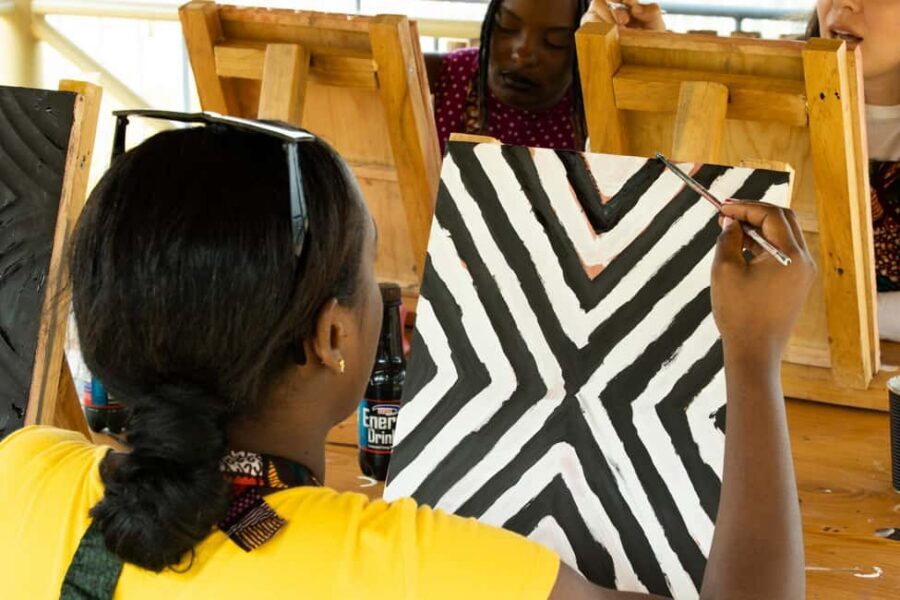
- Imigongo explained in plain terms so you understand the patterns and color logic.
- Hands-on painting with local expert artists who guide you step by step.
- A gallery tour that gives you a better eye for what you’re making.
- Kigali views from Mountain Rebero with light music in the background.
- Materials included plus a take-home piece of Imigongo art you create.
- Small group size (up to 10 people) for a more personal class.
Imigongo in Kigali: what this cow-dung art is really about
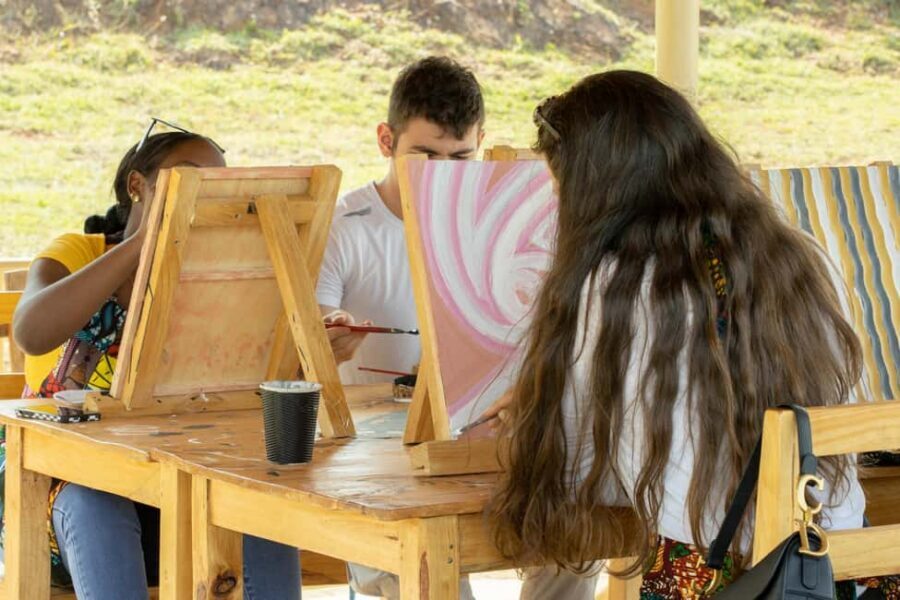
Imigongo is one of those cultural art forms that sounds unusual until you learn the why behind it. This traditional Rwandan style uses cow dung as part of the material base for the surfaces, then the design shows up as sharp geometric patterns and bright colors. In this experience, you start with the story of how Imigongo became known and practiced, including its roots connected to Prince Kakira in the 18th century. Knowing that background matters, because the patterns are not just decoration. They’re part of how communities communicate, celebrate, and mark identity through design.
What I like is that you don’t need to pretend you’re an art expert. The teaching is set up to help you understand the logic of the techniques and the look you’re aiming for. You’ll learn about the decorative patterns and the role of bright colors, and you’ll see why the finished piece feels so distinct once you recognize how the forms repeat.
And yes—getting to paint the piece yourself is the whole point. You’re meant to get hands-on, and you should plan on a bit of mess. That’s not a downside here; it’s part of the value.
You can also read our reviews of more tours and experiences in Kigali.

Inside the studio and gallery: where you get your “pattern eye”
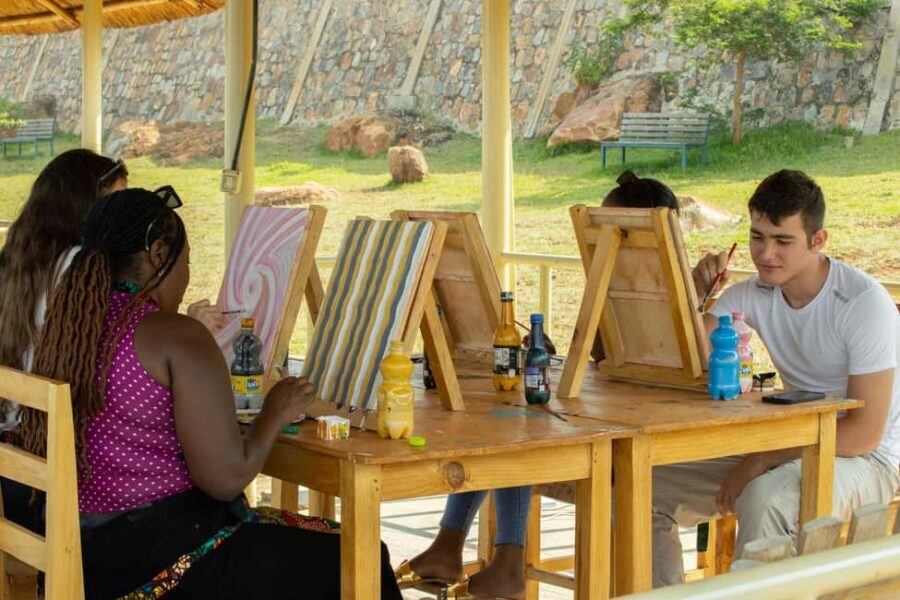
Before the brushwork starts, you’re taken to a local art studio and gallery. This matters more than it sounds, because Imigongo is pattern-driven. If you jump straight into painting without seeing examples, it can be harder to understand how the design builds.
You’ll get a guided tour of the gallery with context that helps you appreciate what you’re looking at. The goal is simple: you should leave with a better understanding of the art form, not just a souvenir. In the studio, you’re surrounded by other works of Imigongo, which gives you something practical to compare with your own work as the class progresses.
The gallery visit also sets the tone. It turns the session from a quick “try it and go” stop into something more thoughtful, like learning a craft while standing in the same space where locals create it. For me, that’s one of the reasons this experience lands well even if you’re not the type to collect art.
Mountain Rebero views and the feel of the session
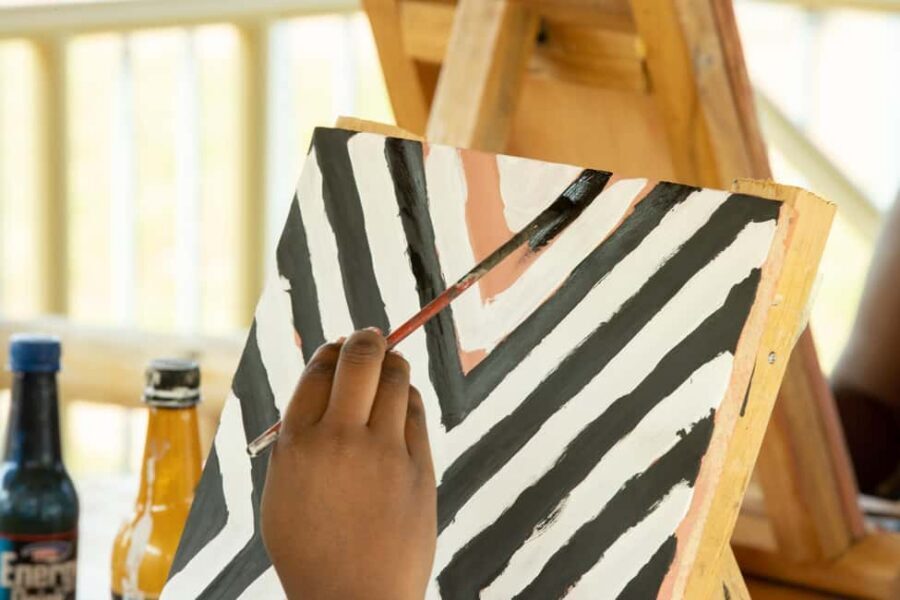
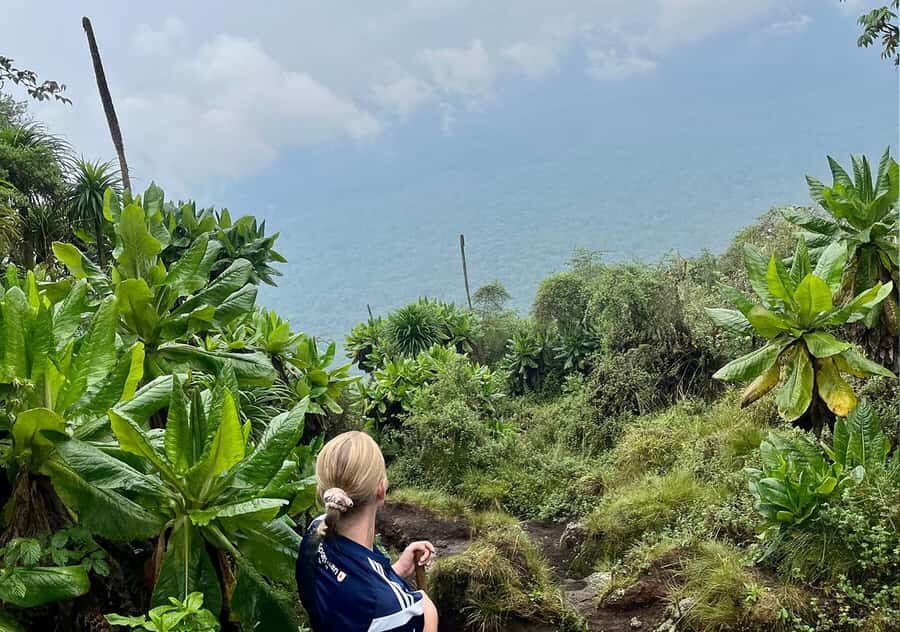
This activity happens in a setting where you can enjoy incredible views of Kigali—especially when the sky is clear. The setting adds a nice rhythm to the day. You’ll take in the scenery, then shift into focused making, and you’ll notice how the class feels less like a workshop race and more like an appointment with a craft.
There’s also light music played during the creative time. It’s not loud or distracting in the way some tours can be. Instead, it helps break the awkwardness you sometimes feel when you’re doing something unfamiliar. One review even flagged that the session is a good way to let go of overthinking and concentrate on the painting. That’s exactly what you’re aiming for: a calm, guided flow where you’re learning by doing.
One small practical note: reviews mention the location can be hard to find, and that mosquitoes can be an issue. If you hate surprises, plan to come prepared.
The hands-on painting: how your piece comes together in 2 hours

The class runs about two hours, and it’s designed so you can realistically finish your own Imigongo piece. That timing is part of the value. You’re not signing up for a half-day commitment or a “maybe you’ll figure it out” situation.
Here’s how it typically feels as the session moves along:
- You learn the basics first. You start with history and cultural importance, plus a look at the decorative patterns and bright colors.
- You get taught techniques by local artists. The instruction is hands-on and practical. You’re not left alone with a brush and vibes.
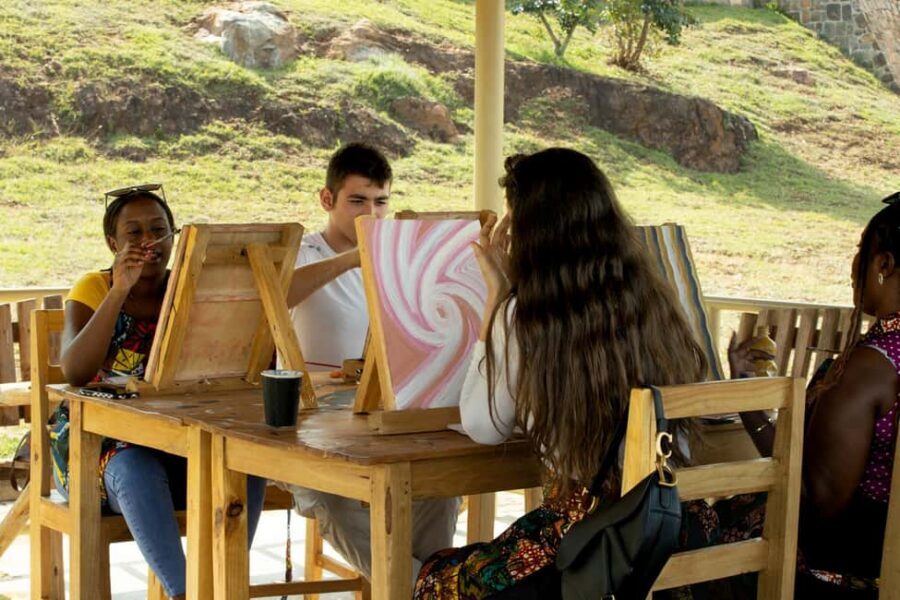
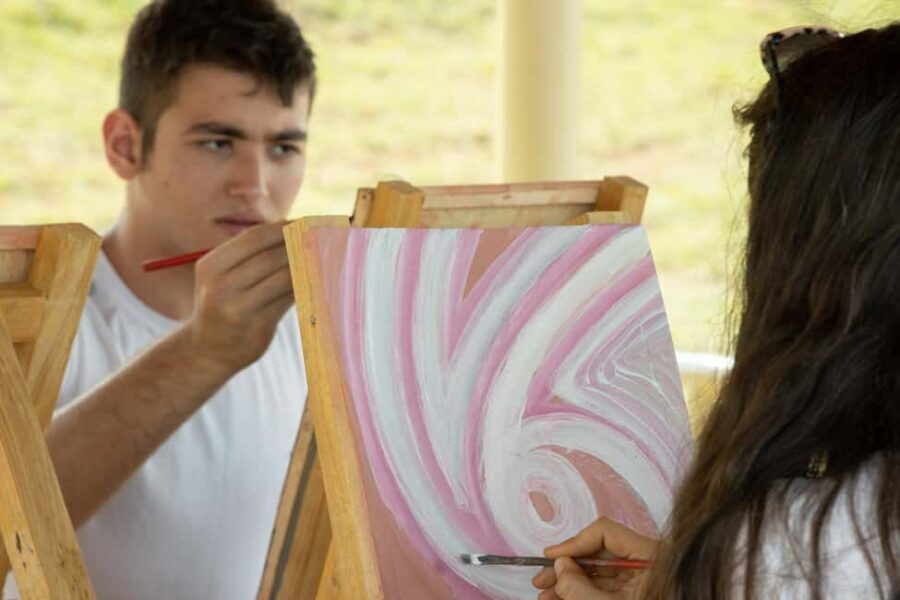
- You paint your individual design. You create a piece step by step, so by the end you’ll have something you can take home as a real personal creation.
- You wrap up with your finished work. The experience includes a take-home souvenir of Imigongo art, and the price covers the piece you take home at the end.
A point worth highlighting: the class is English-led. Reviews also mention teachers who explain techniques well, and the tone is friendly. One review called out the experience as enjoyable even for someone who had not painted in decades. That tells me the method works for first-timers—because the structure is doing the heavy lifting.
Also, the experience includes all materials and supplies. That’s a big deal. Art classes often hide the cost of supplies or make you bring your own. Here, you can show up and focus on learning and making.
What you take home: more than just a souvenir
You’ll leave with your own handcrafted Imigongo painting. This is included in the price, and it’s not an add-on where you’re pushed into buying extra pieces after class.
In practical terms, that means your purchase turns into a tangible object created in the moment. It becomes a better story than most typical travel trinkets, because you can honestly say you learned the technique and followed the guidance to complete it.
In cultural terms, the take-home piece is also a way to participate respectfully in an art form. Instead of just photographing it, you’re learning how the pattern is built and why the materials and process matter. That gives your souvenir meaning.
And for what it’s worth, a few details in the reviews hint at the emotional side of the process. People mention finishing with pride and enjoying the focused time. That matters because when you buy a craft item, you’re often buying the idea of the experience. Here, the experience is part of the product.

Price and value: is $30 worth it?
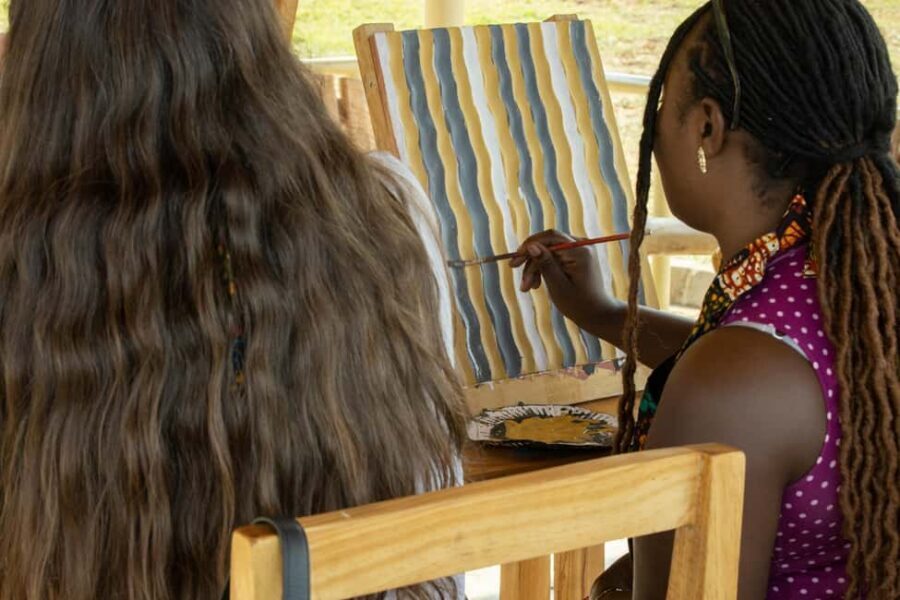
At $30 per person for about two hours, the big question is what you’re getting beyond the activity label.
You’re getting:
- A guided tour of the local art studio and gallery
- Hands-on instruction from local expert painters
- All materials and supplies included
- Your own Imigongo painting take-home souvenir
- Complimentary refreshments during the experience
- A small group setup (limited to 10 participants)
If you compare it to other art workshops that charge for materials separately, $30 starts to look fair quickly. You’re not just paying for time. You’re paying for coaching, context, and the artwork you finish.
The other value angle is the group size. With up to 10 people, you’re more likely to get help while painting. You’re not stuck waiting your turn while a single instructor bounces between a crowd.
The one thing you should factor in is that transport to and from the venue isn’t included. If you’re already in Kigali, that may be easy to solve. If you’re planning routes carefully, confirm how you’ll get there.
Who should book this (and who should skip it)
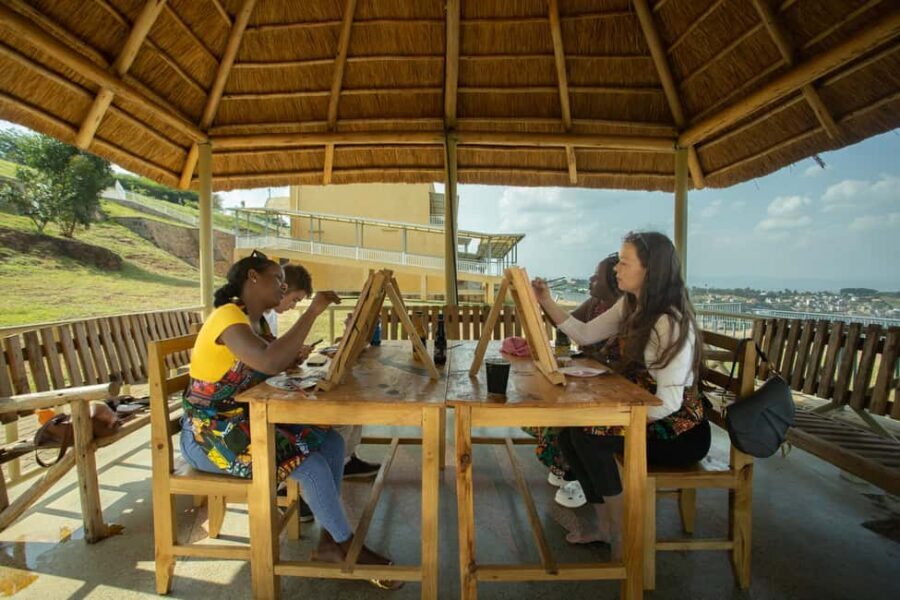
This is a strong match if you want a cultural activity that’s hands-on, not museum-only. It’s also a good choice if you like craft experiences where someone teaches you how to do something step by step.
You’ll likely enjoy it if:
- You’re curious about Rwandan traditions and art
- You want to leave with a personal item you made
- You like small-group settings
- You’re okay getting paint on you (bring a change of clothes)
You should skip or reconsider if you fall into the listed limitations:
- Children under 12 aren’t allowed
- People with severe allergies to paint or similar substances shouldn’t book
- People with altitude sickness may have issues
- People over 70 aren’t suitable
That altitude note is important because the experience includes the Mountain Rebero area and the surrounding views. If you’re sensitive to altitude, don’t gamble.
Practical tips: what to bring and how to avoid common annoyances
This is where you can make your life easier.
What to bring:
- A change of clothes (you’ll be getting your hands dirty)
- A camera (the view is a highlight, especially on clearer days)
What to expect:
- Music may be playing during painting
- Complimentary refreshments are included
- Materials are provided, so you don’t need to bring supplies
What to avoid:
- Alcohol and drugs are not allowed
- Baby strollers and baby carriages are not allowed
Mosquitoes:
One review explicitly suggested bringing mozzie spray. Even if you’re not squeamish, don’t assume the area is mosquito-free. Plan for it.
Finding the venue:
At least one review warned it can be hard to locate. If you’re arriving on your own, give yourself extra time and double-check directions before you go.
Should you book Kigali Imigongo Painting with an incredible view?
If you want something memorable that’s actually interactive, I’d book it. The combination of cultural context, real instruction, and a finished artwork you take home is what makes this experience worth your time. The Kigali views from Mountain Rebero add a bonus that many workshops don’t offer.
I’d be cautious only if:
- You’re dealing with severe allergies to paint materials
- Altitude is a problem for you
- You hate the idea of getting hands (and clothes) messy
- You need extremely easy-to-find logistics, because the venue can take a little effort to locate
If that all sounds fine, this is a solid way to spend two hours in Kigali—learning a traditional art form, meeting local artists, and leaving with something you made, not just something you bought.
FAQ
How long is the Imigongo painting experience in Kigali?
It lasts about 2 hours.
What does the $30 per person price include?
It includes a guided tour of the studio and gallery, hands-on painting with local instructors, all materials and supplies, a take-home Imigongo painting souvenir, and complimentary refreshments.
Do I need to bring art supplies or materials?
No. All materials and supplies are included.
Is the class taught in English?
Yes, the instructor teaches in English.
How big is the group?
The group is limited to 10 participants.
Is there a gallery tour as part of the experience?
Yes. You’ll get a guided tour of the local art studio and gallery.
What should I bring?
Bring a change of clothes and a camera.
Who isn’t the experience suitable for?
It isn’t suitable for children under 12, people who suffer severe allergies to paint or similar substances, people with altitude sickness, or people over 70.