REVIEW · KIGALI
Private Half-Day Guided Kigali City Tour with Coffee Break Included
Book on Viator →Operated by Heaven Experiences · Bookable on Viator
Kigali tells its story fast. This private half-day tour blends a respectful start at the Kigali Genocide Memorial with stops at contemporary art spaces, a specialty coffee café, and a women’s entrepreneurship NGO. I particularly love how the itinerary balances solemn remembrance with everyday creativity, and I also like that the coffee break is built into the route rather than tacked on. One consideration: the memorial stop can be emotionally heavy, so if you prefer light sightseeing all the way through, you’ll want to mentally pace yourself.
You’ll be in a private group with hotel transfers from anywhere within Kigali, and the pace is designed for a half-day: four main stops, about four hours total. In practice, the tour feels best for people who want context—not just photos—plus a chance to support local places like Indiba Arts Space, Question Coffee, and the Nyamirambo Women’s Center.
In This Review
- Key Highlights You’ll Actually Feel in 4 Hours
- Kigali Genocide Memorial: Setting the tone with care
- Indiba Arts Space: Contemporary Kigali in a gallery and workshop
- Question Coffee Gishushu: A specialty coffee break that fits the day
- Nyamirambo Women’s Center: Where opportunity is the product
- Private transportation and the $100 value: What you’re really paying for
- Your guide: The difference between a drive-by and a real city story
- How to plan your day around this 4-hour loop
- Should you book the Private Half-Day Kigali City Tour?
- FAQ
- How long is the Kigali private half-day city tour?
- Is this tour private?
- What stops are included?
- Is pickup available within Kigali?
- What’s included in the price?
- When do I get confirmation after booking?
- What is the cancellation policy?
Key Highlights You’ll Actually Feel in 4 Hours
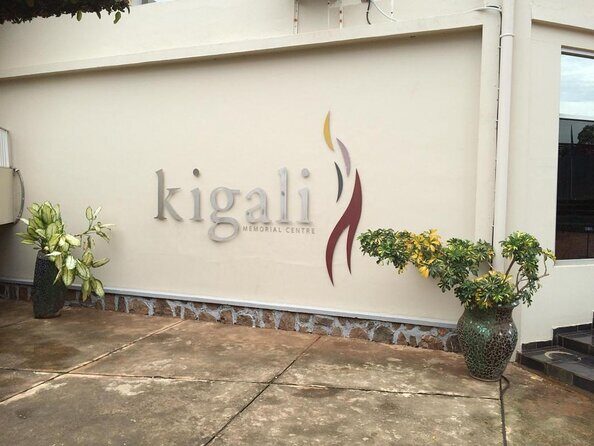
- A meaningful first stop at Kigali Genocide Memorial with an included visitor centre ticket and a full hour on-site
- Indiba Arts Space meeting contemporary Kigali artists in a gallery/workshop setting
- Specialty coffee at Question Coffee Gishushu with admission included for the café stop
- Nyamirambo Women’s Center focuses on training and opportunity through education and vocational support
- Private transportation with hotel transfers anywhere in Kigali for an easier half-day plan
- Private format means you control the flow while still seeing the essential parts of the city loop
Kigali Genocide Memorial: Setting the tone with care
If you’re only in Kigali for a short time, this is a strong way to begin: start with remembrance before you move into the arts and daily life of the city. The Kigali Genocide Memorial commemorates the 1994 genocide, and the site includes the remains of more than 250,000 people. There’s also a visitor centre, which is designed for students and anyone who wants to understand what led up to 1994.
I like the fact that this stop includes an admission ticket and you get a full hour. That time matters. You’re not rushed out like a quick photo stop; you’re given enough space to read, reflect, and decide how much context you want to take in. If you’re sensitive to heavy historical content, just plan to slow down here. It’s not the kind of place where you’ll want a sprint mentality.
Practical note: wear comfortable shoes. Even if you don’t do long walks, memorial visits tend to involve standing, reading, and moving at your own pace. Also, if you think you’ll want time to sit, bring that expectation. You’ll get more out of it.
You can also read our reviews of more guided tours in Kigali



Indiba Arts Space: Contemporary Kigali in a gallery and workshop
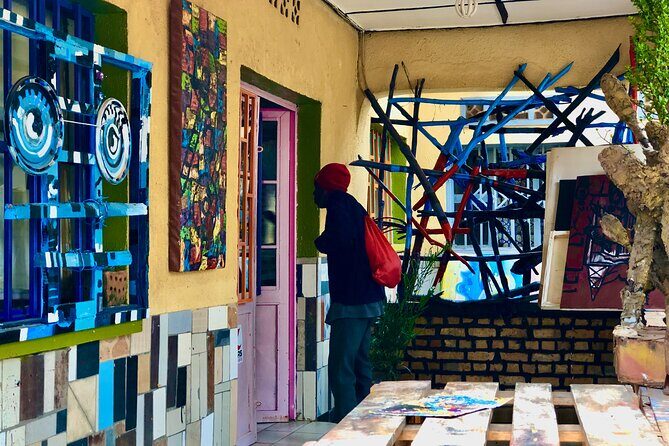
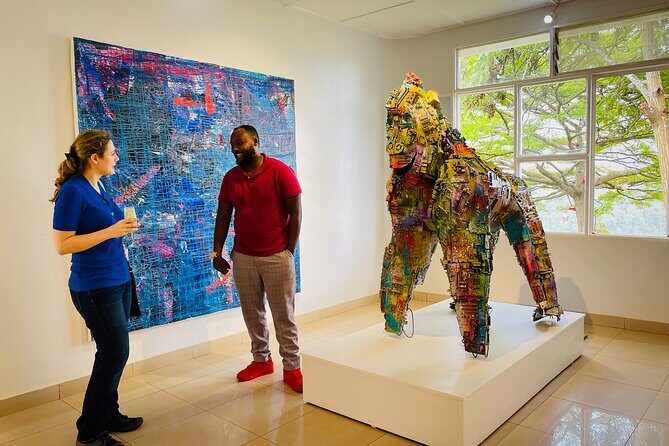
After the memorial, the tour shifts gears—still thoughtful, but lighter on the heart. Your next stop is Indiba Arts Space, which functions as a gallery and a workshop hub. The point isn’t just to see art on a wall. You’ll meet local contemporary artists involved in a newer movement that brings art into the community and also into the visitor experience.
You get about 45 minutes here, and that’s the sweet spot for a first look. It’s long enough to talk with staff or artists, walk through the space, and get a sense of what contemporary work looks like in Kigali right now. It’s also short enough that you won’t feel stuck in one room while the rest of the half-day disappears.
What makes this stop valuable for you is the human angle. Art in many cities can feel like a product. Here, it feels like a process—work in progress, conversations, and a place where creativity has a day-to-day role. If you care about modern African cities beyond the usual monuments, this stop helps you get the feeling of what Kigali is building.
A small consideration: art spaces can mean different things depending on the day. If there’s active workshop work happening, you might see more hands-on activity. If not, you’ll still have the gallery experience. Either way, keep your curiosity switched on.
Question Coffee Gishushu: A specialty coffee break that fits the day
Then comes the coffee. The stop at Question Coffee Gishushu is short—about 30 minutes—but it’s chosen well. This is a state-of-the-art specialty coffee café, and the tour includes the coffee or tea. For many visitors, this is where the day becomes comfortable again: you’re not switching locations every few minutes, and you get a breather to reset.
Even if you’re not a coffee nerd, this kind of stop matters. It gives you a taste of Kigali’s modern café culture, and it’s a natural moment to ask your guide questions—about daily life, art, neighborhoods, or Rwanda’s current priorities. If your guide is the kind who likes to explain, this café break is a perfect time to do it.
Practical tip: check your pace. Thirty minutes disappears fast if you want to order, read the menu, and chat. If you’re hungry, consider whether you need a bigger meal later. The tour includes coffee/tea, not lunch.
Nyamirambo Women’s Center: Where opportunity is the product
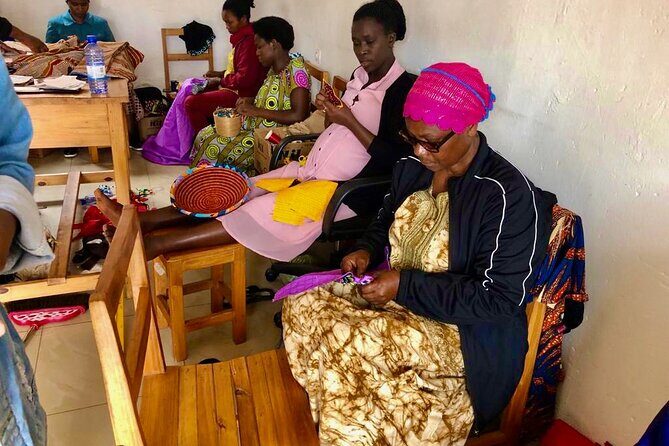
The final stop is at Nyamirambo Women’s Center (NWC). This is where the tour turns into something more than sightseeing. NWC is a Rwandan NGO launched in the late 2007 period by 18 women in Nyamirambo. Their original aim was to address gender-based violence, gender inequality, and discrimination.
Today, the mission includes providing education and vocational training to women who don’t have the means to pay for it. That’s the key idea to keep in mind while you’re there: this isn’t a “story about women” from a distance. It’s about support that leads to employable skills and better opportunities.
The tour includes about 30 minutes here, plus an admission ticket. That’s enough time to understand the focus of their programs and see how their work connects to real outcomes. NWC also launched a product line called Umutima, which means heart in Kinyarwanda. The concept ties training and employment to something tangible—products made by women trained through the organization.
One consideration: this stop can be inspiring, but it also confronts serious issues. If you’re already emotionally carrying the memorial experience, mentally pace yourself through this one too. Your guide can help you find the right tone for questions and conversation.
Private transportation and the $100 value: What you’re really paying for
Let’s talk money honestly. This tour costs $100 per person for about four hours, and it’s private. That means you’re not sharing a vehicle with strangers, and you don’t need to wait for a group schedule to match someone else’s timing.
In Kigali, that private format matters because transfers are included and pickup is available from anywhere within Kigali. A half-day tour can easily turn into a half-day of transit. Here, you’re getting a structured route that keeps your time focused. The included admission tickets also help value: the memorial, Indiba Arts Space, the coffee café stop, and NWC all have their tickets included.
Now, will it feel like a great deal for everyone? It’s usually strongest for small groups (a pair, a family, or friends traveling together) who want control. If you’re traveling solo and you’re price-sensitive, you might compare it with group tours. But if you care about comfort, context, and not rushing, private makes sense fast.
One more point: the tour is designed around cultural and social stops, not only viewpoints. That’s where the “pay a guide” value shows up. You’re paying to understand what you’re looking at and to reduce your mental load in a city where it helps to have local context.
You can also read our reviews of more city tours in Kigali




Your guide: The difference between a drive-by and a real city story
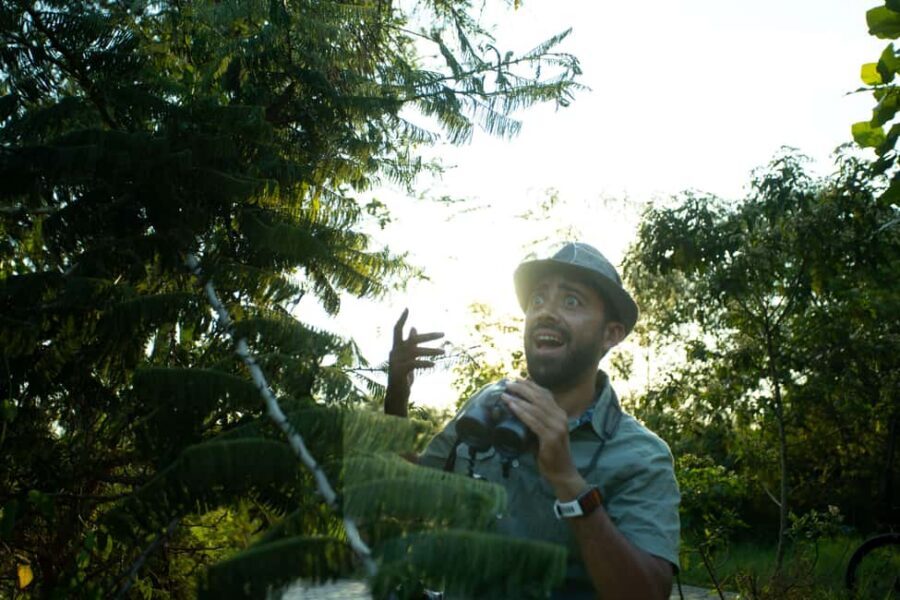
The experience depends on your guide, and there’s plenty of proof that this one can be strong. Names like Oscar and Jamal show up in recommendations for being professional, serious about the job, and fluent in English. Denis (with one n) is praised for teaching Rwanda’s history up to the present in a way that leaves you interested to learn more. Eugene is mentioned for thoughtful touches like water bottles and creating a safe, comfortable feeling.
You should expect a guide who keeps the day flowing and makes sure you hit the key stops. Also, pay attention to how they respond to time stress. One guide was praised for waiting due to a flight delay, which tells you this is not a “drop you and sprint away” operation.
If you want to get the most from your half-day, bring a couple of questions. Ask about how the arts scene works day to day. Ask what coffee means in Kigali beyond a drink. Ask how NWC programs affect women’s employment. Those questions turn your 4 hours into something you’ll remember.
How to plan your day around this 4-hour loop
This is a half-day tour, so the biggest planning trick is keeping the rest of your day open enough to absorb the emotional and mental weight of the route. The memorial can change your mood. The arts and coffee can then reset it. The women’s center brings it back to reality—focused, practical, and motivating.
I’d suggest doing this earlier rather than right before a heavy activity like a long hike or a late-night plan. You’ll get more out of your conversations when you’re not tired. And if you’re hopping from one big sightseeing item to the next, this tour works like a connector: it links history, contemporary life, and social impact.
Also, wear comfortable clothing for both indoor and outdoor parts. Some stops are galleries and cafés, but memorial sites involve walking and standing. You’ll thank yourself after.
If you want to maximize value, ask your guide about any optional add-ons you might have time for. The tour is private, and flexibility is a big part of the experience style.
Should you book the Private Half-Day Kigali City Tour?
Book it if you want Kigali in one easy package: a respectful start, a modern arts stop, a coffee break that fits the pace, and a meaningful NGO visit. This tour is a good choice for first-time visitors who don’t want to plan four different stops on their own, and it’s also solid if you want more than the usual photos—context you can carry back home.
Skip it or consider adjusting expectations if you strongly prefer light, purely scenic sightseeing. Between the memorial and the gender-and-training focus of NWC, this day is not “just entertainment.” It’s education with warmth.
One last reality check: it’s priced at $100 per person and stays around four hours. That’s not a quick grab-and-go. It’s a focused half-day. If you’re okay with that, you’ll likely feel you got your bearings fast and understood Kigali in a more grounded way.
FAQ
How long is the Kigali private half-day city tour?
The tour lasts about 4 hours.
Is this tour private?
Yes. It’s a private tour/activity, so only your group participates.
What stops are included?
The tour includes the Kigali Genocide Memorial, Indiba Arts Space, Question Coffee Gishushu (coffee stop), and Nyamirambo Women’s Center (NWC).
Is pickup available within Kigali?
Yes. Hotel transfers are provided from anywhere within Kigali.
What’s included in the price?
Private transportation is included, along with coffee and/or tea. Admission tickets are also included for the listed stops.
When do I get confirmation after booking?
Confirmation is received within 48 hours of booking, subject to availability.
What is the cancellation policy?
You can cancel for a full refund up to 24 hours in advance of the experience start time. If the tour is canceled because a minimum number of travelers isn’t met, you’ll be offered a different date/experience or a full refund.