REVIEW · KIGALI
Food Walking Tour – Nyamirambo, Kigali
Book on GetYourGuide →Operated by Jollof'Appétit · Bookable on GetYourGuide
Your appetite leads the way in Nyamirambo. This is Jollof’Appétit’s Rwanda-style street-food walk, and what I like most is how 9 tastings turn lunch (or dinner) into a real mini meal tour. I also love that you get to stroll the car-free painted grounds of Nyamirambo, where everyday life spills right into the route.
For $88, you’re paying for guidance, variety, and convenience—not just food. One thing to consider: evening departures can be crowded and jam-packed, so if you’re not a crowds person, pick an earlier slot.
In This Review
- Quick Hits You’ll Care About
- Nyamirambo Food Walk: Why This Neighborhood Feels Like Kigali
- Starting Point at Isame Restaurant and the Practical Stuff
- The 5 Stops and 9 Tastings: What You’re Actually Eating
- Stop type: local restaurant staples (the filling part)
- Stop type: café refreshment break (sweet, spicy, and cool)
- Stop type: smoky street-style bites (the reason to come hungry)
- Stop type: tea and warm drinks (a Kigali signature vibe)
- Finish: coffee or dessert (wrap it up without rushing)
- How the Guide Turns Food Into Context
- Islamic Community Setting: No Alcohol, Lots of Flavor
- Timing, Crowds, and Umuganda: Picking the Right Slot
- Price and Value: Does $88 Make Sense?
- Who This Tour Fits (and Who It Doesn’t)
- Should You Book Jollof’Appétit’s Nyamirambo Food Walk?
- FAQ
- Where is the meeting point for the Food Walking Tour in Nyamirambo?
- How long is the tour?
- How much does the tour cost?
- What languages are available for the guide?
- Is alcohol included or allowed?
- What should I bring?
- Do I need hotel pickup or drop-off?
- When might the tour start change?
Quick Hits You’ll Care About
- Nyamirambo is the whole point: lively neighborhood food and daily routines, not just restaurant hopping
- 5 stops, 9 tastings: you’ll sample a spread instead of one big shared plate
- Car-free painted streets: part snack break, part easy sightseeing
- Non-alcoholic by design: expect spiced teas, juices, and coffee, not drinks with alcohol
- Guides run the show: English, French, Swahili, and Kinyarwanda are available, and quality can vary by guide
- Umuganda changes the timing: the last Saturday of each month can shift departures to 3:30 pm
Nyamirambo Food Walk: Why This Neighborhood Feels Like Kigali
Nyamirambo is Kigali’s “Big Apple” energy—busy, local, and full of everyday choices. You’ll also get a specific cultural layer from the area’s Islamic community, which matters because this tour is non-alcoholic. That shapes the experience: it’s about flavor, tea, fruit drinks, and food culture, not nightlife fuel.
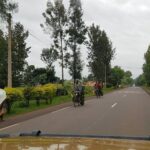
The route passes through painted, car-free streets and grounds that make the walk more pleasant than a typical sidewalk shuffle. And since all the stops cluster in the same suburb, the pacing feels natural. You’re never far from the next bite, but you still have time to look up and notice how people actually live.
You can also read our reviews of more walking tours in Kigali



Starting Point at Isame Restaurant and the Practical Stuff
Meet at Isame Restaurant (KN 170, Nyarugenge district, Nyamirambo Sector). The exact spot is KN 170 adjacent to Merez gas station and opposite Bauhaus Night Club. Also, no hotel pickup is included, and parking can be tricky—plan on arriving by taxi or driver and getting picked up after.
This tour lasts about 3 hours, and you’ll want comfortable shoes because it’s a walking food experience. Children under 17 must travel with an adult, and it’s not suitable for babies under 1 year or people over 70 years.
If you’re trying to time your day right, keep an eye on Umuganda (the last Saturday of each month, 08:00 to 11:00). On those Saturdays, tours run at 3:30 pm—so it can affect your schedule more than you’d expect.
The 5 Stops and 9 Tastings: What You’re Actually Eating
This tour is built around 5 unique places and 9 tastings, so you’re not just collecting “samples.” It’s structured like a guided meal with walking between dishes, usually with short gaps that keep momentum.
Here’s what you can expect across the tastings—think hearty staples mixed with snacks and drinks:
Stop type: local restaurant staples (the filling part)
You’ll start with a proper Rwandan foundation—often ugali with stew and/or rice prepared in a rich way, plus beans. Ugali is the kind of food that makes you understand why people build whole meals around it. It’s simple, but it’s filling in a good way, especially once the stew hits.
You may also run into plantains and chapati-style bread in this section of the route. These make the meal feel rounded, not random.
Stop type: café refreshment break (sweet, spicy, and cool)
Midway through, you’ll switch to café-style offerings—tropical fruits, juices, and spiced teas are part of the mix. You might even see a sugar cane drink, which fits Rwanda’s love for fresh, not-too-fancy refreshments.
This break is important. It gives you a breather from the heavier dishes and keeps the tasting pace comfortable—because you’ll likely be eating pretty steadily for the full walk.
You can also read our reviews of more food & drink experiences in Kigali



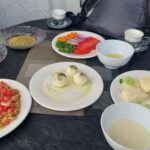
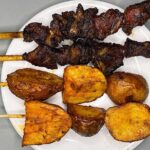
Stop type: smoky street-style bites (the reason to come hungry)
Later stops lean into street-food flavor: brochettes (skewers) and other savory small bites. You might also taste things like sardines with a dough-like ball, depending on the day’s menu flow.
One note from real-world experience shared by past participants: sometimes portions are shared among the group, and not every meat skewer hits the same texture for everyone. If you’re picky about tenderness, keep expectations flexible and focus on the overall variety.
Stop type: tea and warm drinks (a Kigali signature vibe)
One of the stops centers on tea. It’s not just a beverage—it’s part of the culture of slowing down just enough to talk, ask questions, and take in the neighborhood as you eat.
Finish: coffee or dessert (wrap it up without rushing)
The final café stop often includes coffee and/or tea plus dessert. You’ll usually also get another shot of local snacks alongside the sweet finish, so you end the tour feeling fed rather than grazing.
How the Guide Turns Food Into Context
This tour works best when you see it as storytelling with food. A good guide connects each dish to local habits—what people eat, when they eat it, and what the ingredients mean in everyday life.
In strong guides’ hands, you get more than a list of foods. For example, one guide named Joselyto was praised for sharing history and customs around dishes and for being helpful with a pescetarian restriction. Another guide named Myriam was described as communicative and knowledgeable, with clear explanations tied to what you were tasting.
That said, not every experience lands the same way. One downside that shows up in feedback is that some tours felt light on dish detail—like you were mostly eating, not learning why each item was chosen. If you care a lot about preparation methods and cultural meaning, come with questions ready. Ask things like how the stew is built, why the dish is common, or what people eat it with at home.
Islamic Community Setting: No Alcohol, Lots of Flavor
This is a non-alcoholic tour, and the reason isn’t hidden. It’s tied to the neighborhood’s Islamic community norms. So instead of beers or cocktails, you’ll focus on drinks like spiced tea, juices, and coffee.
Expect the refreshment choices to be real parts of the tasting—not just water handed out between bites. That’s why this tour can feel more local and more thoughtful than some alcohol-friendly “party food walks.”
And you’ll want to remember the rules: alcohol and drugs aren’t allowed. If you’re traveling with someone who expects an alcohol option, you’ll need to set that expectation before you arrive.
Timing, Crowds, and Umuganda: Picking the Right Slot
Evenings can be a challenge. The tour can get jam-packed at night, and that affects your comfort, especially if you want space for photos or quiet conversation between stops.
If you’re the kind of person who likes street life but not shoulder-to-shoulder, choose the 12 pm tour when possible. Daytime often feels calmer and easier for pacing, and it also makes the whole walking rhythm more comfortable.
On the last Saturday of every month, Umuganda kicks in (mandatory community work from 08:00 to 11:00), and tours run at 3:30 pm. That can be a lifesaver if you plan ahead, but a surprise if you’re flying by the seat of your schedule.
Price and Value: Does $88 Make Sense?
$88 isn’t cheap, but it can be reasonable depending on what you value most.
Here’s the value equation as it plays out in real life:
- You get 9 tastings across 5 places, which adds up faster than it sounds.
- Guidance is included, and the guide languages (English, French, Swahili, Kinyarwanda) help you actually understand what’s on the table.
- You’re also getting non-alcoholic drinks like tea, coffee, spiced drinks, and juices built into the experience.
Where the price can feel less justified is when a tour doesn’t provide enough explanation. Some people didn’t find the info detailed enough, and a couple of tastings involved foods they felt they could have ordered themselves at restaurants. There’s also the texture issue: one person reported meat that was tough on a skewer.
My practical take: this tour is best when you want structure. If you love food but you hate crowds and group pacing, you might prefer a self-guided route. If you love food and you want local guidance, this can be a smart way to eat your way through Nyamirambo without guessing where to go.
Who This Tour Fits (and Who It Doesn’t)
This is a strong fit for:
- Food-first travelers who want a focused slice of Kigali in one outing
- People who enjoy walking and don’t mind a lively neighborhood feel
- Travelers who want help ordering and understanding dishes (especially with guides speaking multiple languages)
- Travelers with some dietary accommodations may be possible—there’s evidence of support for pescetarian restrictions
This may not be ideal for:
- Anyone who strongly dislikes crowds, especially at night
- People who expect a market-style experience with deep culinary demos (this is more meal-tasting than cooking class)
- Those outside the tour’s age fit: babies under 1 year, people over 70, and children under 17 without an adult
Should You Book Jollof’Appétit’s Nyamirambo Food Walk?
Book this tour if you want a simple plan that trades decision fatigue for structured tastings, local guidance, and a route that includes the painted, car-free neighborhood vibe. It’s a solid choice when you’re hungry, curious, and okay with group pacing.
Skip—or choose a different option—if you’re expecting high-detail dish instruction every minute, or if $88 feels too close to “I can just do this myself.” Also, if you’re crowd-averse, lean toward daytime and plan around the last-Saturday Umuganda schedule.
If you do book, show up with comfortable shoes, come ready to eat, and treat the guide like your translator and cultural connector. Ask questions between bites, and you’ll get way more out of the walk.
FAQ
Where is the meeting point for the Food Walking Tour in Nyamirambo?
You meet at Isame Restaurant on KN 170 in the Nyamirambo Sector (Nyarugenge district). It’s adjacent to Merez gas station and opposite from Bauhaus Night Club.
How long is the tour?
The duration is about 3 hours.
How much does the tour cost?
The price is $88 per person.
What languages are available for the guide?
The guide is available in English, French, Swahili, and Kinyarwanda.
Is alcohol included or allowed?
This is a non-alcoholic tour, and alcohol is not allowed. The tour includes refreshments like juices, spiced teas, tea, and coffee.
What should I bring?
Bring comfortable shoes for walking.
Do I need hotel pickup or drop-off?
No. Hotel pickup and drop-off are not included, and parking may be challenging, so arriving and departing by taxi or driver is suggested.
When might the tour start change?
On the last Saturday of every month (Umuganda, 08:00 to 11:00), tours run at 3:30 pm.